Monday, September 15, 2014

Here's Why You Should Embrace Homemade Treats For Your Dog


How best do you treat your dog to show and prove to it that you love it? You might just be feeding your dog from the frozen food which might end up affecting your dog in one way or another. Making homemade dog treats can be an awesome thing just to prove to your dog how much you adore it. There is importance that comes with this and some of them include:
Control the recipes
The dog foods that we do buy from supermarkets and shops got recipe’s which some are not good to the health of your dog. But if you bake for your pet, you are in control of the ingredients that goes in the food of your dog. You are in a position to use those ingredients which are health to your dog and more so, homemade food aren’t full of preservatives and coloring like the ones we buy in shops. This will help your dog to look and feel good.
homemdade dog treats - retriever with rolling pin in mouth
Save the cost
Research shows that the cost of maintaining a dog is approximately $2,500 a year. So it is important if you can look for ways of saving ad one of them is to prepare snacks for this four legged friend. Preparing homemade dog treats can be less expensive than pre-packaged biscuits. Not only that but they can make great nipples which your dog will love. 
Your pet will be healthy
How healthy will be your dog if you have homemade dog treats for him? Most of these commercial foods that we buy for our dogs are filled with preservatives just to extend their shelve lives. Others are manufactured from byproducts as opposed to the natural snacks that you can prepare for your pet at home. These commercial foods may cause healthy risks to your pet. They may result to your dog having allergies, overweight, diabetes and such. 
Above all, it is fun. You will enjoy baking your pet snacks just as you enjoy having time with him.
One more important thing you have to know is that, it can be challenging for you if you have never done this before. There are more mistakes that you are likely to do when baking snacks for your dog. If you have never done this before, it is important that you get ideas which will help you to be successful.
Some of the ideas you have to get are the ingredients that you have to use, the type of snacks that you will bake, whether it is a Peanut Butter recipe or not edible treats. Homemade dog treats is not only about snacks but some of the treats are just as fun as you might think of. If you are having your pet, it is high time you give your pet a delicious snack that you have prepared yourself. It might be the reason to why it is overweight because you are used to feeding it to the commercial foods. Also, start saving by preparing homemade treats for your four legged friend.

Thursday, September 4, 2014

My Loving Memory of Pawdy


He was our first puppy. We had seen him from the day he was born. But let me take you back a little bit. My husband had been working for a dog breeder for a long time. He fell in love with dogs, and influenced me to love them with time as well. So when a friend had to travel and asked us to stay with his pregnant dog, we were more than glad to oblige. As fate would have it, our friend was unable to return in time for the birth of his puppies, and we found ourselves with the task of delivering the mother, whose name was Rocky. With my husband's experience, we were able to support Rocky successfully through the birth. She delivered six puppies, three males and three females.


When our friend, Brian, came back, he asked us to choose one pup as a gift for the good work we had done. We picked the biggest male who we had already identified as special. He was the first one to perk his ears at two weeks, way before the others could achieve this development milestone. If Ricky's litter was a wolf pack, that puppy would have been the pack leader. Brian gladly gave in to our request and left with the rest of the litter as well as the mother.

It was now time to pick a name for our newest family member. We searched for many hours until we settled for Pawdy. You see, my husband's name is Patrick. Patrick has many variants, one of which is Paddy. We figured that since we were naming a puppy, Pawdy would do instead of Paddy. We let Pawdy live with us in the house. We pampered him and trained him to be the best dog ever. He maintained the trait that made us pick him in the first place; intelligence. He could tell when people were in a good mood in the house and when people were happy. He would sit in the corner quietly when he noticed we were not in the mood to play, waiting patiently.

Pawdy grew into a huge German Shepherd male. He would have easily been mistaken for a ferocious dog, but we had trained him to be friendly, especially to children. Our relatives loved him, and our neighbors grew accustomed to Pawdy's bark. I loved taking him for walks and enjoying the compliments I would receive as the owner of such a graceful dog. I was not the only one. My teenage nephews loved taking him for walks too, and I trusted them with my dog. Looking back now, that was a mistake.

One morning as I was leaving the house, my nephews asked me if they could take Pawdy for a walk. Since they had done so before without any problems, I told them it was okay. When I came back in the evening, disaster awaited at home. I had no idea as no one had been brave enough to call me with the bad news. I found Pawdy lying motionless on the front porch, with foam on the spot where he lay. I couldn't move. I sat down right there beside him and wept. I had too much emotional connection with that dog. 

The explanation I was given was that he just collapsed during the walk. My nephews had called my husband who luckily was in the house. They took Pawdy to the vet, who said that he had food poisoning. The vet's efforts to treat him had failed. I have never known where he had eaten whatever caused his death. Could it be that my nephews were careless and let him eat something poisonous during the walk?

We buried him that evening. A few relatives and neighbors attended. It was a quick and sad burial. Pawdy's bark was forever silenced, a little too soon. We had hoped that he would live to be an old dog and sire many more puppies for us. But it was not to be. Now we own a kennel full of different breeds of majestic show dogs. We named our kennel after our beloved Pawdy. But we have never found the courage to give any of our dogs that name

Wednesday, September 3, 2014

A Dog's Diet


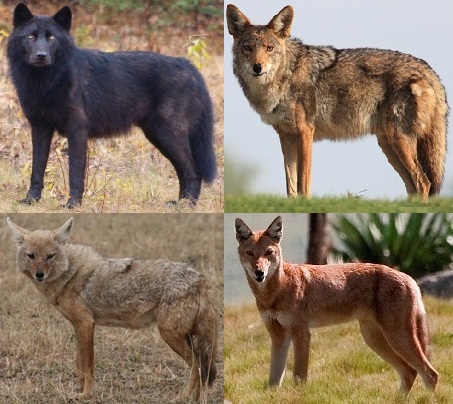
Some people think that dogs are omnivores because they eat both vegetables and meat. This is not true, dogs actually belong to a category of meat eaters called “facultative carnivores”. Facultative” means not required, contingent or optional. In other words, the primary food of dogs is prey or meat but they can survive without eating meat for long periods, but not indefinitely. Just because dogs can survive on an omnivorous diet doesn't mean that is their best diet. Dogs are classified as members of the family Canidae and the order Carnivora.

http://upload.wikimedia.org/wikipedia/commons/d/d3/Genus_canis.jpg 
http://www.vippetfoods.com.au/Uploads/group%20dogs2.png
Anatomical Features Of Carnivores
1. They have short, simple and acidic digestive tracts.
2. They have sharp and elongated teeth for killing and tearing prey. They also have triangular molars with jagged edges whose main function is to provide a smooth cutting motion when eating meat.
3. Their jaws move vertically.
4. They do not have amylase enzyme in their saliva.

Reasons Why Dogs Are Classified As Carnivores
1. Dogs have a short and simple gastro-intestinal tract. Because meat can be digested easily dogs have short small intestines. They also have a highly acidic stomach that enables them to quickly break down proteins and kill the bacteria found in decaying meat. (Dogs have a stomach acidity of around pH 1 while humans who are considered to be omnivores have a stomach acidity pH of 4-5).
2. Dogs do not have the amylase enzyme in their saliva. As a result feeding a dog a carbohydrate-filled diet puts a burden on their pancreas. Since their pancreas will produce the normal levels of the enzymes that are required to digest fats and proteins and have to work harder to produce more amylase to digest the extra carbohydrates in their diet.
3. Dogs have sharp elongated teeth that are designed for ripping, tearing, grabbing and shredding meat. They do not have the large molars that are found in herbivores and omnivores that are used grinding plant material.
4. Dogs’ skulls are heavy, and are also shaped to prevent any lateral movement of their lower jaw when a captured prey tries to remove themselves from the grip of their teeth.
5. Dogs have powerful neck muscles and jaw muscles that they use in pulling down their prey and chewing bone, meat and hide.
6. The mandibular fossa in a dog’s skull is C-shaped and deep); this shape permits only an up and down crushing movement of their jaws.

CANINE NUTRITION

https://blogger.googleusercontent.com/img/b/R29vZ2xl/AVvXsEhSSrJBJu_4WhFXEcPDX6v7DqOVNebWUWPvaPmvFsGz1tIn0JYvlSYaf8kmgoF6e6lm790H5KZoIiaYObIDywjka0pJ2L_Y3cRDYFadrDH0QAJjougVp6DtWICAYi-yO_9DiOSc4V9hdpGj/s1600/vegetarian-dog-treats-02.jpg
Protein Sources
Dogs use protein in their bodily functions, these includes the provision of energy, tissue maintenance, cellular regeneration and enzyme and hormone production. Although protein is an essential component in a dog’s diet not all proteins will function equally, the quality of protein varies widely among the various sources. The factors that affect protein quality include:
i. Protein source: Animal proteins are considered to be “complete proteins” for dogs, while plant proteins are considered to be “incomplete proteins”.
ii. Amino acid composition: Animal proteins contain all of the amino acids that are essential in a dog’s diet in amounts that match the requirements that are needed for their growth and overall health.
Plant protein such as plant protein isolates, soybean meal and corn gluten don’t contain all of the amino acids that dogs need in their diet. The amino acids that are essential to dogs that are often missing in plant proteins include taurine, arginine, tryptophan, methionine and lysine.
iii. Digestibility: Plant proteins digested less easily than meat proteins. As a result animal proteins is the best choice.

Fat Sources
Although fat are viewed negatively by the health conscious individuals, it’s an essential requirement in a dog’s diet. Unlike us, dogs do not suffer from heart disease or cholesterol problems as a result of eating a diet that contains high levels of animal fat. 
Just like protein, fats differ greatly in their quality and structure.
Two key roles of dietary fat are:
i. Provide a concentrated source of energy. The optimum content of fat in a dog’s diet is 15% to18%.
ii. Supply the essential fatty acids the bodies of dogs cannot produce. These amino acids include are linoleic, arachidonic (Omega-6), DHA (docosahexaenoic acid) and EPA (Omega-3). Dogs can get these essential fatty acids by eating fish such as salmon and herring. 
Fats are an essential component of a dog’s diet, but carbohydrates are not.

Carbohydrates
Dogs have no nutritional requirement for carbohydrates and their bodies have evolved t use fat and proteins as their energy sources. Their natural diet contains almost no carbohydrate, only a small amount of carbohydrate from the content of the stomach of their prey. The dog nutrition profile of the Association of American Feed Control Officials’ (AAFCO), shows that carbohydrates are not an essential component of a dog’s diet. 
The high carbohydrate content in today’s pet foods often leads our dogs suffering from insulin resistance, blood sugar fluctuations, and it’s also widely considered to be the major cause of diabetes and obesity in dogs.

Monday, September 1, 2014

Everything you need to Know About Canine Nutrition


Whether you feed your dog home-made food or premium commercial food, it is paramount to understand the basics of canine nutrition. First off, let’s see if dogs are carnivores or omnivores. 
Are Dogs Omnivores or Carnivores?
Over the years, many dog owners have wondered if their canine friends were omnivores or carnivores. Well, dogs are classified as members of the order Carnivora, family Canidae. 

 https://encrypted-tbn3.gstatic.com/images?q=tbn:ANd9GcRfGB4zZ7lgWNahunsCpN0dnzWTcg23kUfggWLthQA3B339NDay0A

However, the debate still goes on. Many scientists believe that dogs are omnivores, having no natural preferences.
The truth lies somewhere in between. While carnivores, such as cats or tigers, have a higher nutritional requirement for certain vitamins and acids, omnivores, such as people and dogs, can easily create their own acids from vegetable oils. Of course, studies have shown that dogs evolved from the timber wolf several millennia ago. Hence, by their genetic nature, dogs demonstrate carnivorous traits. Dogs also don’t grind, they chop, due to their narrow pointy back teeth. 

https://encrypted-tbn1.gstatic.com/images?q=tbn:ANd9GcTIG_1_X3YhxuSjoF_E8LzKeng8K8xx0J7o_1mskXg2ZsmEM2bjJg

Due to these two theories, the dog food marketplace has become a breathing witness to dog’s adaptive abilities. While some products favor meat, others feature vegetables. Of course, most of the dog food available on the market is made of beans and cereal grains. Knowing that dogs are optimized for eating meat while demonstrating a notable omnivorous capacity can help you find the right blend of foods for your canine friend.
A Balanced Nutrition
When talking about canine nutrition, it is also important to determine how much protein, fat, carbohydrates, vitamins and minerals your dog needs.
1. Proteins: they are the building blocks of cell growth, repair and maintenance. In the case of dogs, the biggest demand for proteins comes from the maintenance of hair and fur.

https://encrypted-tbn2.gstatic.com/images?q=tbn:ANd9GcRGkOcEZzmHlZe7Ru_1YG8KzPibmHa7lRtZ31v-rdmCvJqlGBI4

For a healthy fur, your dog will need about 20 grams of proteins. Moreover, make sure you feed him the right dog food, which should contain the following 10 essential amino acids:, histidine, leucine, isoleucine, arginine, lysine, , phenylalanine, threonine, methionine, tryptophan and valine. In case one of these amino acids is missing, the body cannot synthesize proteins effectively. As a direct result, your dog’s fur might not shine anymore.
2. Fats: fats are considered the most concentrated source of energy in a dog’s diet. Along with proteins, fats contribute to the absorption of Vitamins A, D, E and K. A healthy diet should include the following fatty acids: linolenic acid, linoleic acid and arachidonic acid. While linolenic acid contains omega-3 fatty acids, the linoleic one is the main source of omega-6 fatty acids. Scientists agree that dogs need more linoleic acid (omega 6) than omega-3 fatty acids.
3. Carbohydrates: even though dogs do not necessarily need carbohydrates because their bodies can get enough energy just from fats and proteins, carbs can be a good caloric source for most dogs. As a matter of fact, carbohydrates, which are usually found in fruits, veggies and certain dog foods, provide minerals, iron and fiber. Your dog needs all of that to enjoy a healthy body and stay fit.
4. Minerals: these organic nutrients are essential for your dog’s growth and strong teeth & bones. These are microminerals and macrominerals. Balance is critical with minerals, because too much absorption of microminerals can interfere with the absorption of macrominerals and vice versa.
 When feeding your dog, avoid all by-products, with added preservatives or sweeteners. Instead, choose a balanced diet with 75% proteins (chicken meat), fats (5%), fruits, vegetables and whole grains (10%). Your canine companion will definitely thank you for your care.