Some people think that dogs are omnivores because they
eat both vegetables and meat. This is not true, dogs actually belong to a
category of meat eaters called “facultative carnivores”. Facultative” means not
required, contingent or optional. In other words, the primary food of dogs is
prey or meat but they can survive without eating meat for long periods, but not
indefinitely. Just because dogs can survive on an omnivorous diet doesn't mean
that is their best diet. Dogs are classified as members of the family Canidae
and the order Carnivora.
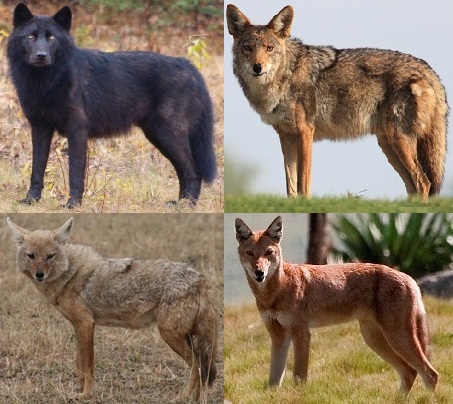

Anatomical Features Of Carnivores
1. They have short, simple and
acidic digestive tracts.
2. They have sharp and
elongated teeth for killing and tearing prey. They also have triangular molars
with jagged edges whose main function is to provide a smooth cutting motion
when eating meat.
3. Their jaws move vertically.
4. They do not have amylase
enzyme in their saliva.
Reasons Why Dogs Are Classified As Carnivores
1. Dogs have a short and
simple gastro-intestinal tract. Because meat can be digested easily dogs have
short small intestines. They also have a highly acidic stomach that enables
them to quickly break down proteins and kill the bacteria found in decaying
meat. (Dogs have a stomach acidity of around pH 1 while humans who are
considered to be omnivores have a stomach acidity pH of 4-5).
2. Dogs do not have the amylase
enzyme in their saliva. As a result feeding a dog a carbohydrate-filled diet
puts a burden on their pancreas. Since their pancreas will produce the normal
levels of the enzymes that are required to digest fats and proteins and have to
work harder to produce more amylase to digest the extra carbohydrates in their
diet.
3. Dogs have sharp elongated
teeth that are designed for ripping, tearing, grabbing and shredding meat. They
do not have the large molars that are found in herbivores and omnivores that
are used grinding plant material.
4. Dogs’ skulls are heavy, and
are also shaped to prevent any lateral movement of their lower jaw when a
captured prey tries to remove themselves from the grip of their teeth.
5. Dogs have powerful neck
muscles and jaw muscles that they use in pulling down their prey and chewing
bone, meat and hide.
6. The mandibular fossa in a
dog’s skull is C-shaped and deep); this shape permits only an up and down
crushing movement of their jaws.
CANINE NUTRITION

Protein Sources
Dogs use protein in their bodily functions, these
includes the provision of energy, tissue maintenance, cellular regeneration and
enzyme and hormone production. Although protein is an essential component in a
dog’s diet not all proteins will function equally, the quality of protein
varies widely among the various sources. The factors that affect protein
quality include:
i. Protein source: Animal
proteins are considered to be “complete proteins” for dogs, while plant
proteins are considered to be “incomplete proteins”.
ii. Amino acid composition:
Animal proteins contain all of the amino acids that are essential in a dog’s
diet in amounts that match the requirements that are needed for their growth
and overall health.
Plant protein such as plant protein isolates, soybean
meal and corn gluten don’t contain all of the amino acids that dogs need in
their diet. The amino acids that are essential to dogs that are often missing
in plant proteins include taurine, arginine, tryptophan, methionine and lysine.
iii. Digestibility: Plant
proteins digested less easily than meat proteins. As a result animal proteins
is the best choice.
Fat Sources
Although fat are viewed negatively by the health
conscious individuals, it’s an essential requirement in a dog’s diet. Unlike
us, dogs do not suffer from heart disease or cholesterol problems as a result
of eating a diet that contains high levels of animal fat.
Just like protein, fats differ greatly in their
quality and structure.
Two key roles of dietary fat are:
i. Provide a concentrated
source of energy. The optimum content of fat in a dog’s diet is 15% to18%.
ii. Supply the essential fatty
acids the bodies of dogs cannot produce. These amino acids include are
linoleic, arachidonic (Omega-6), DHA (docosahexaenoic acid) and EPA (Omega-3).
Dogs can get these essential fatty acids by eating fish such as salmon and
herring.
Fats are an essential component of a dog’s diet, but
carbohydrates are not.
Carbohydrates
Dogs have no nutritional requirement for carbohydrates
and their bodies have evolved t use fat and proteins as their energy sources.
Their natural diet contains almost no carbohydrate, only a small amount of
carbohydrate from the content of the stomach of their prey. The dog nutrition
profile of the Association of American Feed Control Officials’ (AAFCO), shows
that carbohydrates are not an essential component of a dog’s diet.
The high carbohydrate content in today’s pet foods
often leads our dogs suffering from insulin resistance, blood sugar
fluctuations, and it’s also widely considered to be the major cause of diabetes
and obesity in dogs.

No comments:
Post a Comment